Gray Matters · Kansas City
The quality of our lives is shaped by what we notice, and by whether we have language for what we've noticed.
Observe
Before interpretation, there's attention. These are the ordinary places I keep looking — a school pickup line, a neighbor's sign, a confirmation email — and what surfaces when I slow down long enough to actually see them.
Forty Minutes on a Five-Minute Email
I kept asking AI to make it tighter, cleaner, more professional — and every version came back technically improved and somehow less mine. By the end I couldn't tell what I actually thought anymore. The most expensive thing a tool can cost you isn't time. It's trust in yourself.
Read the full piece →A Thousand Open Tabs in My Head
Every personalized experience I encounter seems designed for someone with exactly one thing on their mind — one purchase, one trip, one goal. That's not my reality. Every platform knows what I bought. None of them know what I'm carrying.
Read the full piece →School Pickup Line
"Thank goodness I was young before the internet and all of my bad decisions are somewhere on a Polaroid." A throwaway joke between moms, and underneath it, a full reckoning with what permissive parenting actually means — and why a mother who grew up loose is now strict about the things that count.
Read the full piece →A Show About Black Teenagers Falling in Love
Watching Forever twice, and realizing the second viewing was really about noticing what I'd always wanted television to be allowed to do. Tact and representation aren't opposites. The best work trusts its audience completely — and most work doesn't.
Read the full piece →The Neighbor Sign
A "New Neighbors" sign goes up next door, and somehow that small, ordinary event becomes the occasion for processing a layoff, a crisis of faith, a confrontation with shame — and the slow practice of surrendering control without surrendering hope.
Read the full piece →Pattern Recognition as Faith
The instinct that makes me good at research — noticing the pattern before I've decided to look for it — turns out to be the same instinct through which I experience faith, motherhood, and self-awareness. If the devil is in the details, God must be in the patterns.
Read the full piece →The Kid Who Always Needed the Why
On being the child who couldn't accept an answer without the context underneath it — and what it means to raise children with that same relentless need to understand why things are the way they are.
Read the full piece →Interpret
Noticing isn't enough on its own. The next move is naming — finding precisely what was confusing, why it was confusing, and the language that resolves it. This is where attention turns into something usable.
Users hit a validation error and stopped cold — 68% abandoned the form entirely. The problem wasn't confusion about taxes. It was the message itself: technical, accusatory, and devoid of what to actually do next.
Before
ERROR: Form 1040, Line 12b — Standard Deduction Amount Invalid. The value entered for Standard Deduction does not match the amount calculated based on your filing status. Please refer to IRS Publication 501 to determine your correct Standard Deduction amount.
After
Standard deduction amount doesn't match your filing status
We expected $12,950 based on your filing status (Single). You entered: $10,000
What to do:
· Update the amount to $12,950, or
· Change your filing status if Single isn't correct
What changed: Abandonment dropped from 68% → 10%. An 83% reduction, from naming the actual problem instead of citing the regulation.
40% of severe weather alerts were being ignored — not from apathy, but because they communicated risk in meteorological language rather than human terms. Precise to scientists. Meaningless to the people who needed to act.
Before
SEVERE THUNDERSTORM WARNING: A severe thunderstorm capable of producing golf ball sized hail and wind gusts in excess of 70 mph is located near [LOCATION], moving northeast at 45 mph. HAZARD: 1.75 inch hail and 70 mph wind gusts. SOURCE: Radar indicated.
After
Take shelter now — dangerous storm approaching [LOCATION]
A severe thunderstorm is heading your way and expected to arrive within 20 minutes.
What's coming: baseball-sized hail, 70 mph wind gusts, and possible flying debris. Go inside immediately. Move away from windows.
What changed: Ignore rate dropped from 40% → 12%.
FirstNet is the only wireless network built exclusively for first responders. The technology was genuinely important — dedicated spectrum, priority and preemption — but the people who needed to adopt it don't read spec sheets. They run toward burning buildings. The work wasn't explaining the tech. It was naming the feeling underneath it.
Before — Technical Brief
FirstNet utilizes Band 14 spectrum with priority and preemption capabilities. During network congestion events, FirstNet subscribers maintain Quality of Service levels unavailable to commercial subscribers.
After — Campaign Copy
When seconds matter, your network can't be the problem.
Dedicated spectrum means FirstNet has its own lane. Even in the middle of a mass casualty event, your connection is protected. You go first. Always.
You have lights and sirens for a reason. Your network should too.
What changed: 23% above benchmark conversion. 40%+ email open rates vs. 18–22% industry average. Adoption supported across 18,000+ public safety agencies.
Survey completion was low — not because of the questions, but because the intro made the survey feel like a legal document. People felt surveilled, not invited. The fix was naming what was actually true: this helps your community.
Before
Your response to this survey is voluntary and protected under Title 13 of the U.S. Code. The Census Bureau is authorized to conduct this survey under Section 182 of Title 13.
After
This survey helps your community.
The data we collect shapes where funding goes — for schools, roads, and services in your area. Your answers are completely private and can never be tied back to you.
What changed: Completion rate increased 35%.
Apply
This is the same instinct turned toward organizations: research, strategy, and brand writing as the practical application of noticing carefully and naming truthfully.
Translation
Translation
What I Observed
Forty minutes regenerating an email until I couldn't tell what I actually thought anymore.
What It Reveals
Every product creates a relationship between a person and their own competence. The best ones strengthen it. The worst ones erode it slowly enough that you don't notice until you've lost the thread of your own voice.
AI doesn't eliminate the need for judgment — it relocates where judgment becomes valuable. The risk isn't that a tool thinks for you. It's a tool that quietly trains you to stop trusting your first instinct, one small edit at a time. The right question for any AI product isn't what it can generate. It's what it lets a person keep: their confidence, their agency, their sense of ownership over the work.
This Pattern Matters In
Where in your product or your team is a tool quietly replacing someone's confidence instead of strengthening it?
Translation
What I Observed
Every platform knows what I bought yesterday. None of them know what I'm carrying today.
What It Reveals
For years, organizations have treated personalization as a data problem — collect more signals, build bigger profiles, create finer segments. But data tells you who someone was. It doesn't tell you what matters to them right now.
The gap most experiences fail in isn't a lack of information. It's the distance between what a system knows about a person historically and what that person is actually trying to navigate in this moment. More personalization doesn't close that gap. It just gets more precise about the wrong thing.
This Pattern Matters In
Where are we mistaking data about someone for an understanding of what they actually need right now?
One complete product narrative per day for 30 days. Each piece opens with a human problem and closes with a product that earns its place in someone's life. Daily proof of range across categories, audiences, and surfaces.
Day 1 — FlightSync
"Three hours into a flight delay. Two kids under 8. Your daughter needs dinner. Your son needs to run. You need wine. Hotel check-in: 3pm. Current time: 6:45pm. Current location: Still in Dallas."
Day 7 — CartCache
"You bought your daughter's soccer cleats at Dick's Sporting Goods three months ago. She just outgrew them. Where did you buy them? What size? What brand? You don't remember."
Strategic consulting focused on hospitality and experience design — UX research for luxury hotels and restaurants, AI implementation strategy, and brand positioning for experience-forward operators.
Current focus: helping restaurants and hotels implement AI that enhances hospitality rather than replacing it, grounded in behavioral observation.
A decade across federal platforms (IRS, NOAA, Census Bureau) and enterprise telecom (AT&T FirstNet) — finding what was confusing in complex systems and translating it into language and design that changed behavior at scale.
About
I'm not in the business of producing content. I'm in the business of finding true things that have gone unnoticed, giving them language with precision and care, and helping people live a little differently because they can finally see them.
I'm also neurodivergent, which means I've been personally acquainted with friction my entire life. I notice it everywhere — in interfaces, in instructions, in the way a form makes you feel stupid for not understanding it. That stopped being frustration a long time ago. It became data. And somewhere along the way, data became joy: the specific delight of watching something that was hard become easy, for someone who needed it to be. For my kids figuring out the world. For families moving too fast to read the fine print. For the first responder who needs their network to just work. I find that genuinely thrilling.
I spent a decade in tech and government — AT&T, federal agencies — before founding Gray Matters. But the work was never really about UX research, or copywriting, or brand strategy as separate disciplines. It was always the same question, asked in different rooms: what are we missing, and how do we name it?
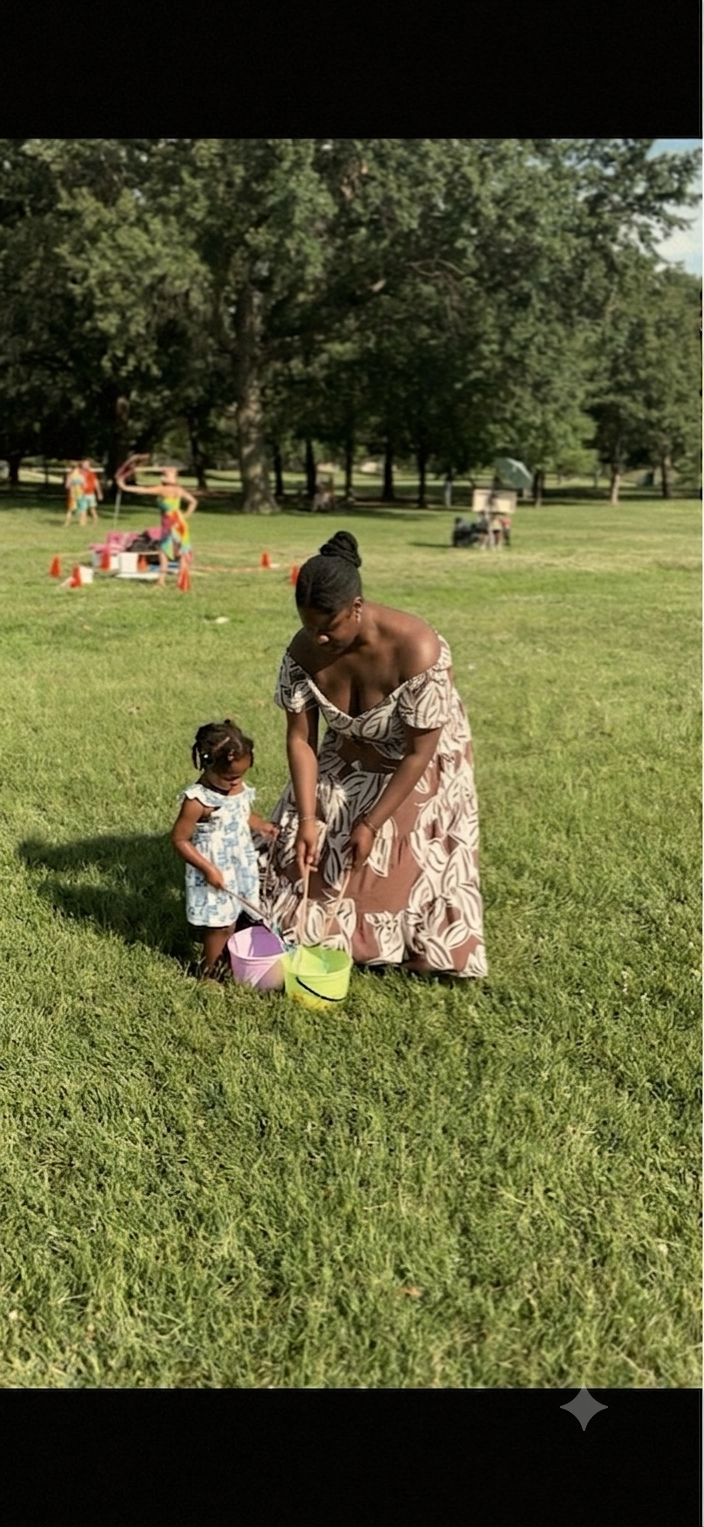
Translation is how research becomes strategy. It's how people become understood. It's how organizations become clear. Clarity isn't the goal — it's what allows better decisions, stronger relationships, more intuitive products, and more human organizations.
Notice carefully. Name truthfully. Leave people seeing more than they did before.
Organizations
I partner with organizations navigating complexity — where research, language, and strategy need to become one conversation. Available for embedded strategy, in-house leadership, long-term collaborations, and full-time roles where someone needs to uncover what people are experiencing and translate it into meaningful action.
Partnerships
I collaborate with brands whose work deserves deeper language and sharper observation — especially in hospitality, travel, food, education, technology, and other experience-driven industries that want to communicate with greater clarity and humanity.
Commissioned Essays
& Features
I write reported essays, cultural criticism, and long-form features that connect everyday experience to larger questions about how we live, work, build, believe, and belong. Available for editorial commissions, magazines, journals, and thoughtful collaborations.
Contact
If you've reached something that feels difficult to explain — a product, a team, a customer, or even a season of life — that's usually where I begin.